The BIG 400 of 2013
Video
Reply
I just saved a bunch of money by switching to WORDPRESS! OK, advertisement over. I’ve had the wordpress blog for a while now in addition to my website, but, 2 things:
1. I’ve been paying a lot of money for the website –silly really. I don’t know the HTML stuff, and needed something simple to put a website together and so I was using WIX. It was easy, and expensive, especially when you consider I was making no money off the site.
2. I don’t update either my blog or my website as often as I should. The proof is the date of my last post here –it’s basically been a year.
SO, going with the cheaper deal, here I am, like so many others, on WordPress! Not dissing WP though. I’ve just got a lot to learn to really make it do what I’d like.
As I said, basically a year since my last post here. Geesh. 2013 hasn’t been an amazing year for me, artistically. I sold some pieces (actually more than I ever had before, mind you, they were small, cheap pieces but still), and I made some new work (the least I’ve made since 2007), but I kinda stayed out of the scene, so to say. Ah, but life continued on, that’s for sure. The biggest change 2013 sent me was having to find a new place to live, and dealing with what that means for me —After living in the same place for 8 years, you could say I was “settled in”, so, 3 months in, you could say I’m still “unsettled”.
Still, art must be made, and like I said, here it is, basically a year later—
THE BIG 400! December 14th, 2013! Same deal as last year, only bigger —The fine folks at People’s Gallery round up a big ol buncha artists of all shapes, sizes, ages, and skill levels (the “400”, which, as usual, is actually more than the number stated –last I heard, over 600 people participating), give them wood panels to make art on, and, around 2 months later, taah-daah, we got a gigantic show with lots of awesome work that you pull off the wall and buy for $40 a piece! Phew! Yeah, I’m doing that. See you there, and don’t forget to bring a can of food (or two) for the Oregon Foodbank.
Here’s a few of my BIG 400 entries

“clutterbaby”
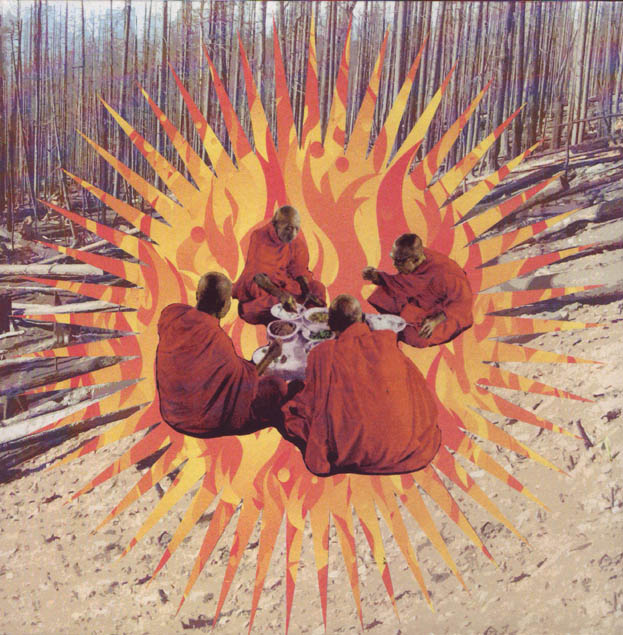 “We are a consuming fire”
This gallery contains 10 photos.
MAKE SURE YOU COME TO THE SHOW, and REMEMBER, bring a can of food or two for the Oregon Food Bank! Thanks!
—-So. I’ll get to Screen Printing in a second –To anyone who’s reading this that doesn’t know the context of why I’m putting up these instructions—
The church I go to, Imago Dei Community, does Christmas a bit different. Different, like, how Christmas should actually be, instead of how it is, with it’s Shopping Malls, Credit Card Debt, Vain buying of stuff that may entertain for a while, but has no lasting, eternal value. I have to pause here for a minute.
Our society really has forgotten that Christmas IS about “eternal value” –We, as CHRISTIANS, celebrate the fact that Our Saviour was brought to us, in frail human flesh. We celebrate his mortal birth on this planet, the start in a series of events that ultimately lead to his humiliating, criminal death on a roman cross, for our sins (for the world’s sins) and his glorious resurrection 3 days later. I could in no way live a life without sin, but He did. Sometimes I can’t make it through the day without giving into a temptation of one sort or other, which leads me to sin and death, but He did. He lived and gave His perfect life in trade for my (for our) guilty lives, that deserve death and worse. You hear of people doing valiant, selfless acts like diving onto live grenades to save friends -Jesus died a slow excruciating death for us, only when He did, we weren’t even His friends, just some sinners who didn’t even care about Him. He died to pay for my sin, since God needs someone to pay for sin, He can’t just “let us off the hook”, because God is a God of Justice. God is also a God of Love and Mercy, so Jesus, He who is begotten of God, decided to pay that price for us. So, for NOTHING we’ve done or given Him, in fact, DESPITE all we’ve screwed up, Jesus takes the blame, the sin, the shame, gives us eternal life in Heaven, and while we’re here on earth He places the Holy Spirit in us to be our guide and comforter, if only we believe on Him! WOW, What kind of price can you put on that this Christmas? That, my friends, is Eternal Value!
Anyways, back to Advent Conspiracy, the name for what we’re up to. What’s that? In their words:
A few years ago, the Imago Dei Community thought: “Instead of celebrating Christmas exchanging gizmos and gadgets, what if we spent that money helping the poor, the brokenhearted, the enslaved?”
Today, this is how Imago Dei does Christmas – by giving more love and spending less money. The money we’ve saved so far by doing Christmas differently has funded a safehouse for trafficking victims in Portland, drilled water wells in Africa, and brought medical supplies to those who desperately need them, but there is still so much more good to be done.
So Advent Conspiracy does things like the DIY fair — so that everyday people can actually create meaningful gifts for loved ones without spending a lot of money, and the money that’s saved can go towards those who actually NEED it.
So for the DIY Fair I’m showing people how to screen print. This has been quite a challenge for me, since when I screen print, I use —more “professional” ways and means, and what I’m showing is very basic, without trying to use anything fancy or “professional” —
What follows are the uncondensed instructions to “DIY screenprinting”.
VERY D.I.Y. “SCREEN PRINTING”
In 3 “easy” steps!
MATERIALS: A silkscreen, bought or homemade/ an image to print/ either Mod-Podge or “Speedball” brand Drawing Fluid and Screen Filler/ Ink (this can be “screen printing ink” or acrylic paint)/ A screen printing squeegee, or anything that you can use as a flat blade -like a window squeegee, a spackle knife, or even a piece of plastic signboard could work. Practically all of these items can be found at your local art store.
(may I suggest “I’VE BEEN FRAMED” art store –4950 SE Foster, Portland. Cheap, Family owned, and Friendly!)
Step 1: GET A SILK SCREEN.
You can buy a screen ($12-$20 and up) or you can make one using material you might have lying around at home. If this is a one-time project, you should make it yourself using a embroidery hoop and some organza fabric (NOT SILK-that’s just the traditional name for it, but silk isn’t used!) or other strong but sheer mesh, preferably not cotton. You can also build a more traditional screen by making a wood frame (or using a simple picture frame) and stretching the fabric over it —Please check out the links below for a more full education on this!
Step 2: GET YOUR ART ON THE SCREEN.
This is the hardest part, depending on HOW you’re getting the image onto the screen. There are about a dozen different ways to do this, each with their own pros and cons. I’ll mention 2 ways that are both fairly easy and more reliable than others. When it comes to your art, it’s best to remember that a screen print is basically like a stencil, so your art should be an image that can be translated strictly as a black and white image (but you can print it in any color ink). With either method, simple or complex images are possible; it’s all about how much time (and patience) you put into it. Before you do either method, trace the image. Tape the paper to the outside of the screen, then trace it on the inside –this is muy importante if you have WORDS for part of your image, since it’s really easy to end up doing this “backward”, making your SDROW DRAWKCAB! If it is legible on the inside of the frame (where you’ll be putting the ink), then you’re on the right track. Trace your image lightly with a pencil, or if you need a more visible tracing, use a micron-ink pen. After you trace your image, flip it over, take off the paper and work on the outside of the screen using either method. Please check out the links included for a more thorough education on either method!
The Screen Filler Method (Direct block-out or “Negative Method”). This is done using either Screen filler or Mod-Podge to block out those areas that you do not wish to print. This allows the ink to be forced through the screen wherever the Screen Filler has not been applied. Simply paint all areas where you DON’T want the ink to go with either substance. If you plan on using this screen over for another image, use Screen filler, since Mod-Podge cannot come out of the screen.
The Drawing Fluid Method (or “Positive Method”). Paint Drawing Fluid ONLY the areas that are the image with drawing fluid, allow to dry, then use your squeegee to coat the entire screen with Screen Filler. Once that’s dry, you can rinse the drawing fluid out of the screen, creating the finished screen.
After you’ve done either method, and the screen is dry, tape the inside sides of the screen and the outside of the screen, any parts that didn’t get treated, or else ink will come through.
Step 3: PRINT IT!
But before you get your best material out, PRACTICE on scrap material FIRST, so you can get the feel of how to print your image. Place your finished screen onto the surface you’re printing on. Pour a bead of ink onto the screen, above the stenciled image, then pass your squeegee over the image smoothly and evenly. This is pressing the ink thru the open pores of the screen fabric onto the surface of what you’re printing on, so you might have to have a “light touch” or press harder, so PRACTICE IS NECESSARY for a good print. Then gather the courage and do the print for real! Print one, or print as many as your heart desires! If you printed on fabric, follow the instructions on the ink bottle to make sure it’s permanent.
YOU’RE FINISHED! Clean the ink out of the screen by spraying it with water, then let it dry, and you’re ready to go again!

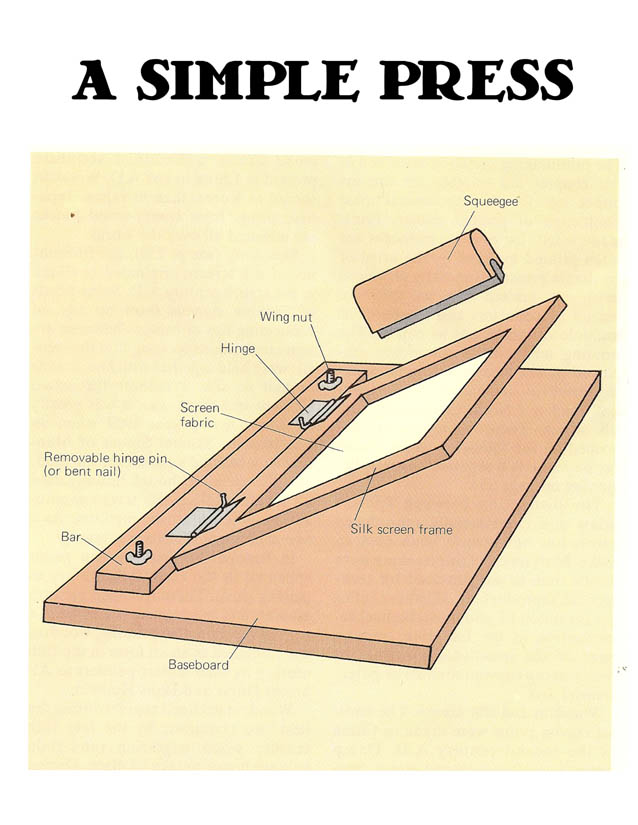
BUT, BEFORE YOU DO ANYTHING, PLEASE GO TO THESE LINKS! There is more than ample amounts of information on “DIY Screen printing” –just Google that phrase and you’ll see! Here’s just a small but helpful sample that should help you:
How to Build and correctly stretch a Silk Screen (at least by DIY standards)
http://www.youtube.com/watch?v=lYEsl64O07c&feature=related
Screen printing via embroidery Hoop and the Negative Method:
http://www.do-it-yourself-gifts.com/how-to-screen-print.html OR:
http://www.instructables.com/id/At-home-silk-screening-on-the-cheap/?ALLSTEPS
Screen printing via the Drawing Fluid Method:
http://www.youtube.com/watch?v=TVJzHzhyo-U
or
http://www.youtube.com/watch?v=VihHCo7ugLM
….you’ll find the other Blick videos and videos by JerrysArtarama insightful too…
Screen printing via the Paper Stencil Method
http://www.youtube.com/watch?v=SKTSCewtiAU&feature=related
…then there’s this guy –CATSPIT PRODUCTIONS –This guy is a Professional screenprinter, so sometimes He might go over your head, but if you’re willing, give his “Learn how to screenprint” series a watch, starting with this one. Very much can be learned from this guy, but it’s like going down the rabbit-hole —how far in do you want to go?—–http://www.youtube.com/watch?v=YFM_tBfyjM0&list=PL18A3871BFE1C456D&feature=plcp —-Because, If you REALLY want to begin to know what screenprinting is about, from DIY to professional with all the plans for homemade stuff as well as pro information, then THIS BOOK http://www.silkscreeningsupplies.com/product/bk100
Go to YOUTUBE and INSTRUCTABLES.COM and type “screen printing” phrases, and you’ll pull up all sorts of good information. Don’t be surprised if you find many more ways to get your art printed via screen printing- and don’t be afraid to try them! If you’re interested in the history or more general info on Screen Printing, read the Wiki Page! GOOD LUCK!!!

Lastly, for anyone who’s read this far, believe me, I KNOW there’s more to screenprinting than this! Hey, this is supposed to be for people who don’t know nuthin’ bout no printin. I know the “Photo-Emulsion” method is by far the BEST method to get your image on the screen, and, once learned, one of the easiest —give me a screen shop and a day and I’ll teach it — so maybe I will…
I leave you with a nifty vid of the Preeminent Gig Poster Artist and a brief synopsis of one of his newest screen printed posters.
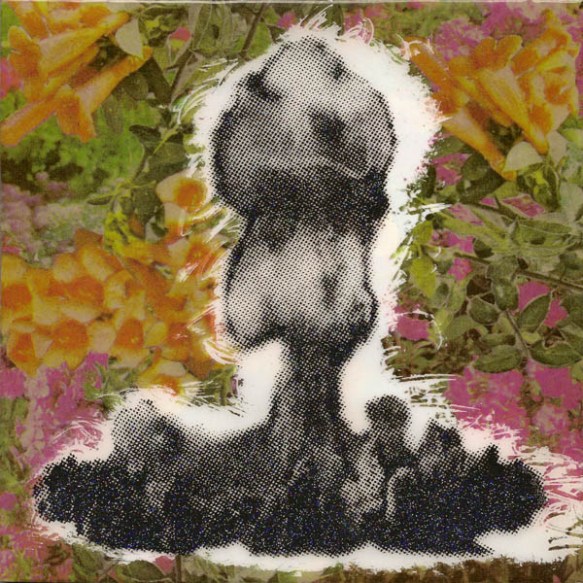
–“Death”–
Screenprint on flower collage panel, 1 of 10, in an overall series of 40.
–The die pretty series is an interpretation of “the four horsemen of the apocalypse”–Forty 8″x 8″ panels (10 panels for each subject), 2 color screenprint with glitter overlay on 40 unique flower-collaged pattern. Images come from association mixed with a search engine worked by software into process to final product. And the glitter? The glitter emphasizes the product, and really “bumps up the cool factor”, cause what’s cooler than revelation? Die pretty.

–war–
Screenprint on flower collage panel, 1 of 10, in an overall series of 40.
–The die pretty series is an interpretation of “the four horsemen of the apocalypse”–Forty 8″x 8″ panels (10 panels for each subject), 2 color screenprint with glitter overlay on 40 unique flower-collaged pattern. Images come from association mixed with a search engine worked by software into process to final product. The print, the subject, black and white by means of halftone (like old news, like newspapers), some would say to be taken seriously, but we reinterpret as some obsession Die pretty.

–pestilence–
Screenprint on flower collage panel, 1 of 10, in an overall series of 40.
–The die pretty series is an interpretation of “the four horsemen of the apocalypse”–Forty 8″x 8″ panels (10 panels for each subject), 2 color screenprint with glitter overlay on 40 unique flower-collaged pattern. Images come from association mixed with a search engine worked by software into process to final product. Flowers-God created/man’s touch at dominion, color, beauty, we stoop as far as manipulation and vanity. Die pretty.
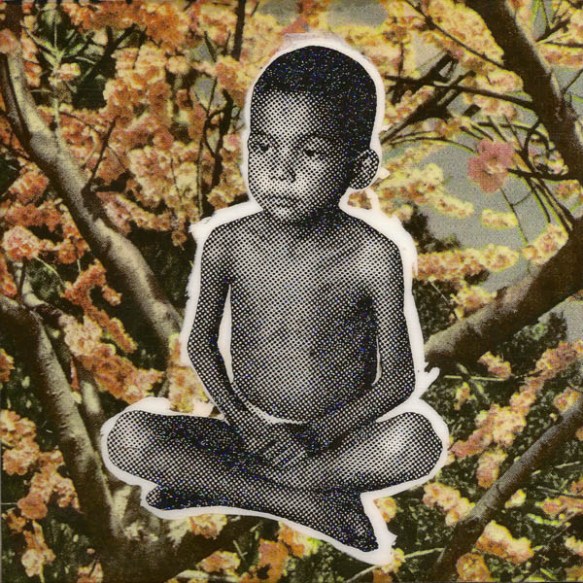
-famine–
Screenprint on flower collage panel, 1 of 10, in an overall series of 40.
–The die pretty series is an interpretation of “the four horsemen of the apocalypse”–Forty 8″x 8″ panels (10 panels for each subject), 2 color screenprint with glitter overlay on 40 unique flower-collaged pattern. Images come from association mixed with a search engine worked by software into process to final product. A glamorous product depicting it’s prophecy to a dying world, and you get the joke, or you don’t (what joke). Die pretty.
In more recent events, I had my “Homage to Albers” series and the “triangle series” show at my church, Imago Dei Community. This was something that took quite a while to “get the ball rolling” (not on my part) but once it was up, it was very gratifying. Nice to see my Brothers and Sisters supporting my creative endeavors. Actually sold a piece at that show too. I know it’s not fair to say that no one likes my art because no one buys it, but when I have a sale, it reignites the idea that maybe someday enough people will buy enough of my art that I could make a living doing it, it affirms that people actually DO like it. “Put your money where your mouth is” goes through my head when friends say they like a piece, or “I’ve heard lots of good stuff about your show”.
OF COURSE, it should go without saying that I’m not doing it for the money –obviously not the case. But it sure does make a person feel better about spending so much time and money into a project.
Now, as in a week from now, will be the opening of the “88 STRONG” show at the Goodfoot Lounge. This will be the 3rd year I’ve participated in this show. Basically, the good folks at Goodfoot give artists eight 8″x8″ wood panels to create art on, using 88 possible “themes”, which are single words/phrases. Examples of this would be: Art Mafia / Compost / Dreads / Eat your face / Hick / It’s in my mouth / Lebowski / Roller Girls / Vegan —you get the point, pretty random word/phrases. Your blanks can be 8 different themes, or all the same, or any mix. You’re given basically a month to turn these blank panels into art, which are then framed and shown (100 some artists x 8 a piece=’s a lot) and sold for $50, the artist getting the majority of the $. It’s open to artists of all skill-levels and mediums, as long as it’ll “fit” onto the panels.
I love this show and “the big 100″ show (which is similar in concept, except no themes are given) because they’re basically a work out for me, and usually end up teaching me either a new technique or a new set of ideas or a lesson of some sort. They’re a work out for me because I have to keep at it –8” square panels are small enough that they don’t have to be time consuming, yet having 8 to make in a month’s time makes it challenging. My artwork typically takes a 3 to 6 month turnaround, mostly because I think a lot on the piece, making the revisions and figuring out the technique in my head before actually applying to the work. And, honestly, I procrastinate a bit too. The 88 Strong doesn’t allow that. I’m always a bit of a mess at first, cause “whatamigonnadoohshit”, then when that’s figured out it’s “ohcrapi’mgonnarunouttatime”, but I have yet to fail with getting something made that I approve of by the deadline. Well, I usually approve of most of it. Sometimes it doesn’t all work the way i want it, but I allow it because others may approve of the final piece even if I’m not fully behind it. The artist is his biggest critic, and all of that.
So, this year, my 8 pieces all revolve around the theme “DAMAGED GOODS”. This started out with a roll of packing stickers I’ve had for at least 3 years, which is my argument for why artists (in particular collage artists) should not be criticized for being pack-rats. As soon as i saw that phrase, I knew I had to use them –Neon Orange stickers with bold face ACCEPT ALL DAMAGES printed on them.
The process went something like this –cover panels with these stickers, somewhat randomly, then apply white spray paint over about 3/4 of the surface. Then I took stills from a video, which then got worked and re-worked in Photoshop (I won’t go into detail, but I imagine anyone who knows photoshop decently could back-track the filters/brushes/techniques I used) then printed these out to fit specific panels and transferred them onto the panels via gel-medium transfer. For me, this was good training on specific techniques I use in photoshop to take images and ready them for 4-color process printing, though the end result was not made into screen printed images (not enough time and too laborious for one small print), and was also educational on how to “colorize” a black and white image.
As for the subject –The stills were taken from a you-tubed video the house is black, a documentary made in 1962 about a Leper colony in Iran –very sobering, with it’s narration being parts Old Testament/Koran/Poetry, it’s beauty is it’s ugliness. Leprosy (aka “hansens disease”) has been around since the Old Testament and many passages in the Bible are devoted to the diagnosis, treatment, and care of those afflicted. Like the Plague, it is rarely seen today, though both still exist and both can still kill if not treated immediately and effectively (Paul Gaylord of Prineville, OR. is still recovering from the Plague, contracted from a cat bite earlier this year). These people, no matter when in history, have had to deal with not only the devastation of their health and body, but their entire life. Lepers in the past were kept away from everyone they loved, hushed away to colonies. “UNCLEAN, UNCLEAN!” was their cry when coming anywhere near anyone, to warn them, to keep them away, strangers, friends and family. In this day, Paul has the stigma of the Plague on him before he is even out of the hospital. People who were going to help him have now bowed out, under the fear of being infected (even though it is not passed by human transmission).
Biblically speaking, Leprosy is considered a metaphor for sin. As leprosy kept the afflicted away from others because of his uncleanness, sin keeps us away from God. Unsaved people often say “I’m a good person” or “People are basically good”, and so go on with their lives thinking they’re “good enough” for God. But God is not only a Good God, He is also a Holy God. Impurity is NOT allowed in His presence, no matter how small. Even if we ignore the doctrine of being born in sin, put under the magnifying glass of God, we all have sinned, we all come short, we all would come into his presence having to cry out “UNCLEAN! UNCLEAN!!”. Praise God that He provided us with His begotten Son, Jesus Christ, who can clean us of the leperous sores of sin, who can redeem us, who makes us presentable, righteous, in God’s presence. Christ’s good work not only saves us from eternal death, but through the Holy Spirit, works on restoring us from the damages we’ve made to ourselves in this life. Like a leper, we come to Christ as we are, dirty, damaged, falling apart, broken people. As it’s said of the Church “it’s not a museum for the good people, it’s a hospital for the broken”. (mark 2:17). If you accept Jesus as your Saviour, He “accepts all damages”.

So how’s it going? Nah, I don’t want to talk about it. Chances are you don’t really want to hear it anyways. Let’s just say, “same ol’, same ol'” and call it at that. This is what I got going:
This Friday, March 30th —Pancakes and booze. One night artshow-shindig. This is something completely different for me, in several ways. I have my reservations about this show, but mostly that’s just “inner-skeptic” talking about my own entries into this event and not the event itself. Will something sell? Sure hope so. Regardless, I like pancakes, and to some degree I like booze, so I’m putting on the optimistic face.
Then I just signed up for two more shows in the near future –a Garbage Pail Kids show at the Artichoke Gallery in June, and, also in June at the People’s Gallery doing the Landscape show. I am neither a landscape artist or a GPK cartoonist, but here we go, wish me luck!
Meanwhile, I’m about to wrap up my experimentation on my Homage to Albers and just produce about 3 to 5 works. I wanted a whole gallery full, but I’ve been having so many problems with this project just to bring it to life, and now that it’s living, it’s not really as great as I intended. The experience with this project has been kinda like buying a house that’s a money-pit. It’s cost me more cash than 2 projects combined would usually cost me, as well as costing me a chunk of sanity a couple times. The BIG take-away from this project has been learning to make films for screenprinting using photocopies and vegetable oil. It works, even with fine half-tone dots! It’s so damn DIY, and “unprofessional” that I’m sure some people are just rolling their eyes, but what’s a poor man to do when he has a large-scale print made all with halftones and no thousand-dolla-film printer? I’m usually the guy at Kinkos piecing together 8 x 11 or 11 x 17 overhead transparencies together, but those little dots are frustratingly hard to piece together correctly, not to mention you’ve got to piece a 2nd layer together that has to fit exactly over the other or no go. Ah, but I could ramble on… Anyhoo, the Vegetable Oil technique works, there’s just a learning curve on your exposure times.
 larrychristensen